Once upon a time, in the realm of numbers and melodies, a fascinating connection emerged between the world of classical mathematicians and the enchanting realm of music. Picture a time when equations and notes danced together, creating a symphony of harmonious proportions. Join me on a journey through the annals of history as we explore the captivating relationship between classical mathematicians and the realm of music, where the elegance of mathematics meets the timeless allure of melodies.
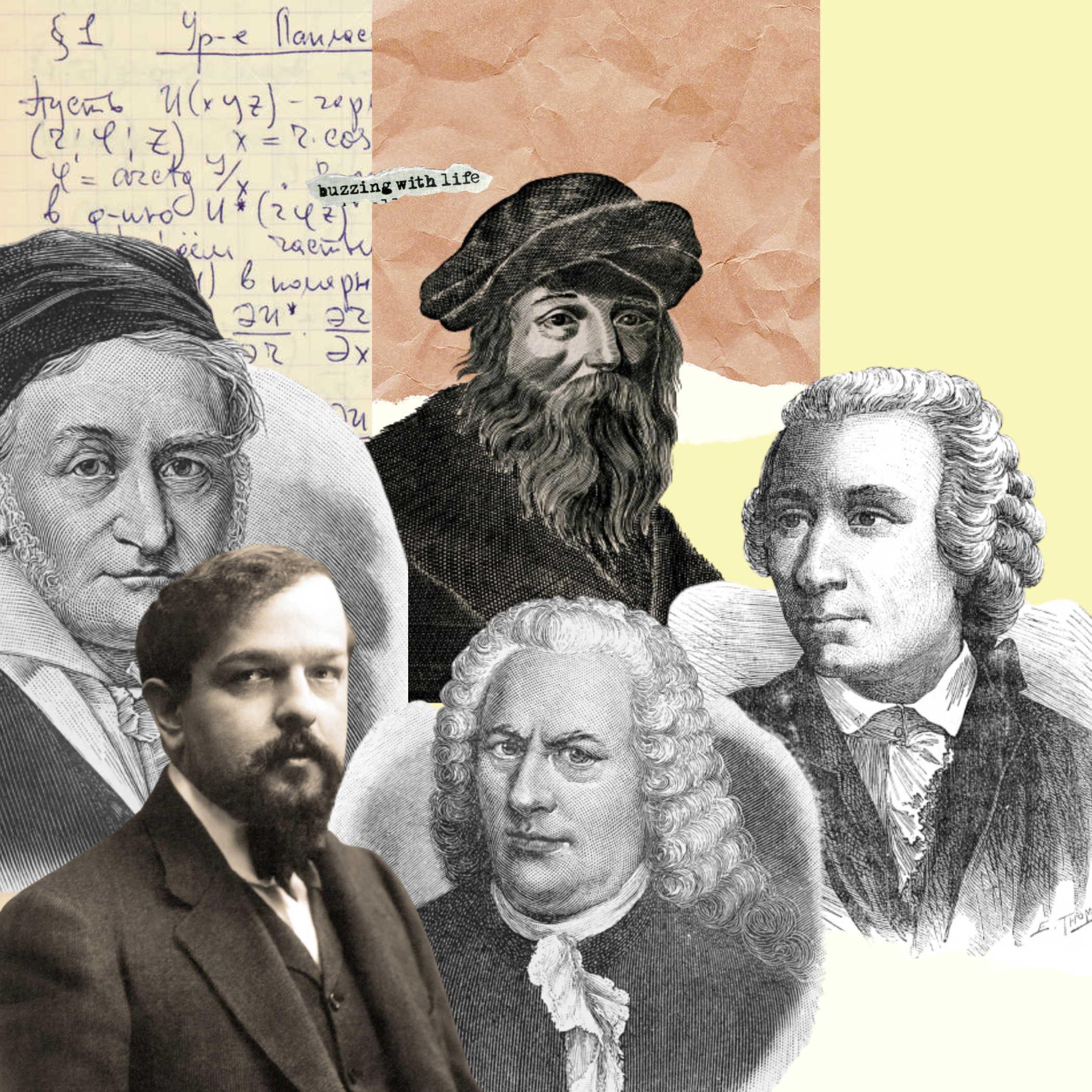
In the ancient world, one mathematician stands tall among the rest - Pythagoras. Known for his profound insights into the world of numbers, Pythagoras also discovered the mathematical foundations of musical harmonies. By studying the ratios of string lengths and their corresponding musical intervals, Pythagoras unveiled the secrets of the Pythagorean tuning system. This system, built on the mathematical ratios of harmonious intervals, laid the groundwork for Western music theory and influenced countless compositions throughout the centuries.
Fast forward to the 18th century, where the genius of Leonhard Euler shone brightly. Euler's mathematical prowess extended beyond the realm of numbers, as he delved into the intricate world of music theory. He explored the mathematical relationships between chords and their progressions, unraveling the underlying structures that govern musical harmony. Euler's work provided composers with a deeper understanding of the principles of harmony, paving the way for the creation of complex and harmonically rich musical compositions.
As we journey through the annals of time, we encounter the towering figure of Johann Sebastian Bach. Revered as one of the greatest composers in history, Bach's music is a testament to the fusion of mathematics and art. His compositions are imbued with intricate mathematical patterns and structures, showcasing his profound understanding of mathematical principles such as counterpoint and fugue. Bach's masterpieces are a testament to the harmonious marriage of mathematics and music, captivating listeners with their timeless beauty and mathematical precision.
Carl Friedrich Gauss, a mathematical luminary of the 19th century, also left his mark on the world of music. Gauss's exploration of the mathematical relationships between musical intervals and pitch perception shed light on the complexities of human auditory perception. His research into the physics of sound and the mathematical foundations of music deepened our understanding of how we perceive and appreciate the harmonies and melodies that resonate within our ears.
Stepping into the realm of the early 20th century, we encounter Claude Debussy, a composer who embraced the spirit of mathematical experimentation. Though not a mathematician by profession, Debussy's compositions embody a sense of mathematical curiosity and exploration. He ventured into non-traditional harmonic structures and tonalities, pushing the boundaries of traditional Western music conventions. Debussy's music reflects a spirit of mathematical innovation, as he sought to create new sounds and textures that challenged the status quo of musical expression.
The connection between classical mathematicians and the world of music is a testament to the timeless allure of numbers and melodies. From Pythagoras to Euler, Bach to Gauss, and even Debussy, these brilliant minds have left an indelible mark on the world of music, infusing it with mathematical beauty and artistic brilliance. So, the next time you find yourself captivated by a symphony or mesmerized by a melodic masterpiece, remember that behind the harmonies and melodies, there may be a hidden mathematician, weaving a tapestry of numbers and notes that transcends time and resonates deep within our souls.