Have you ever wondered how music made its way until now? Have you ever felt curious about all the changes and milestones that music has undergone? Let’s get ready to take a look at music’s evolutionary history so as to answer those questions.

Music is believed to have existed for a long time. The first records of music date back to the prehistoric era. Most of the evidence was musical instruments found at archaeological sites, including bone flutes, free reeds, stringed instruments, and clappers. The oldest known instrument was suggested to be a bone flute, which has aged for 20,000 years. However, some investigations have hypothesized that music had developed way earlier. Researchers believe that humans have been making music for more than 60,000 years ago, using vocal techniques such as singing, humming, or whistling. Findings of prehistoric musical relics distribute widely, on almost every continent.
During the antiquity period, which started in the 4th millennium BC, music was more widespread. Notation systems, visual representations of music, had been invented in this era, with the oldest discovery of it found in Babylon in 1400 BCE. Music appeared in cultural occasions in civilizations in Egypt, India, Mesopotamia, China, Greece, the Roman Empire, and South America. Its themes were often about or connected to each civilization’s own gods. Vocal music was largely hymns, while wordless music marked the use of many harp-family instruments like lutes or lyres. More musical concepts, such as pitches and sound frequency ratios, were investigated. Despite comprising a diversity of styles, ancient music was notably characterized by the importance of the lyrics and unaccompanied melodies - monophony.
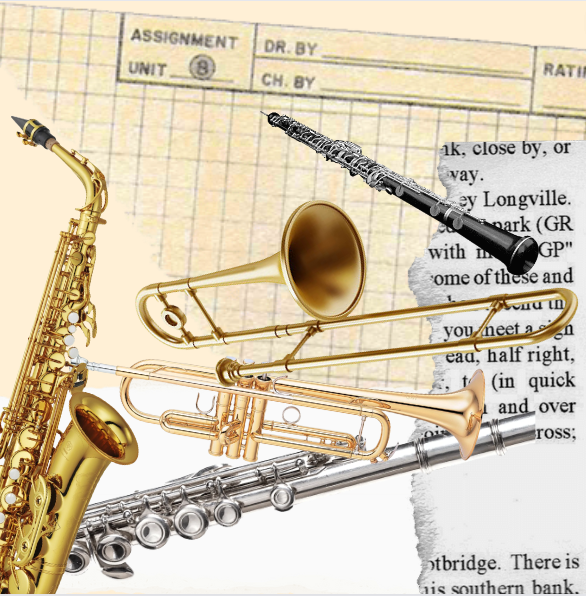
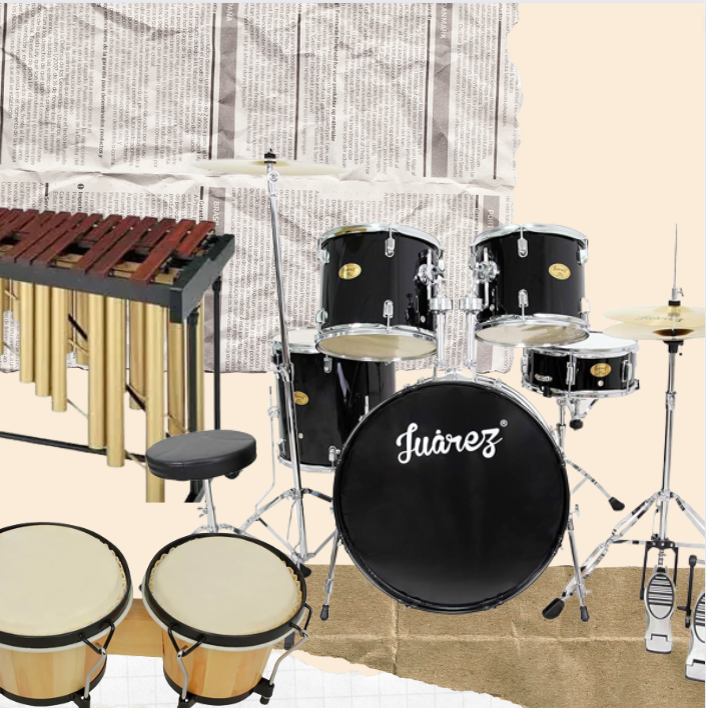
Human history witnessed a significant shift after the fall of the Roman Empire in the 5th century: the transition between the Ancient and Middle Ages. Consequently, music had changed substantially too. Due to the dominance of the Catholic Church in Europe then, Medieval music was mostly sacred or secular Latin pieces that sounded dark and sentimental. As a result, chants, hymns, and choral music became popular, along with instrumental music and instrument-accompanied vocal works. The Middle Ages music made use of mainly woodwinds, stringed instruments, horns, and drums.
The Renaissance was such a cultural breakthrough, and music was affected considerably too. Musicians were free to try a variety of forms, rhythmic patterns, harmonies, and musical notations. Dissonance was put into use more. Musical themes widened: instead of focusing on religions, the themes switched to love and emotional expressions. More types of instruments, such as organs, brass, and strings, gained popularity during this period.
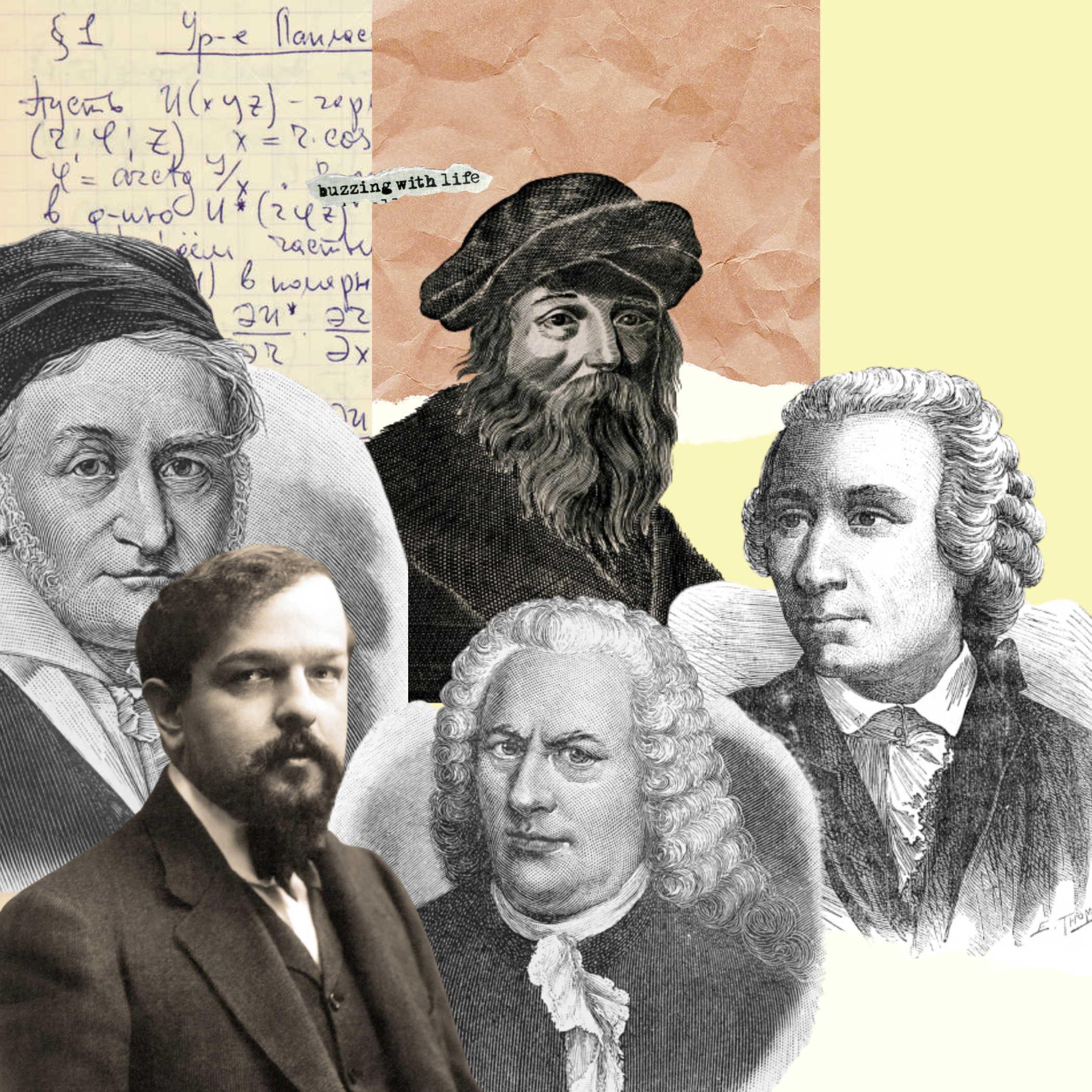
Following the Renaissance was the Baroque era. This is where Western classical music saw itself rise dramatically in every aspect: from musicality and theory to themes, forms, and instruments. Brass, strings, woodwinds, and keyboards (such as organs and harpsichords) were commonly used. Musical works were generally composed for orchestras and string quartets, as well as choral music, in the form of a fugue, canon, suite, concerto, or minuet. The representative figure for this period would be Johann Sebastian Bach, considered “the father of music”, with his foundational contribution in music. Some notable Baroque compositions are Bach’s Toccata and Fugue in D minor, Vivaldi’s Four Seasons, C.P.E Bach’s Solfeggieto in C minor, and the well-known Pachelbel’s Canon in D.
The Classical era, or Classicism, maintained its fame throughout the late 18th and early 19th centuries. In contrast with polyphonic patterns in the Baroque era, Classical music was more of accompanied melodies, involving different keys, rhythms, harmonics, and dynamics. Instrumental music, especially by piano, was paid attention to. This period also accounted for the popularity of new forms, such as sonatas, waltzes, or symphonies, besides already-famous ones like concertos or preludes. Succeeding the Classical era was Romanticism. Many famous composers, namely Mozart, Beethoven, Schubert, Schumann, Tchaikovsky, Chopin, and Liszt, were of either the Classical or Romantic period. There were distinctive artistic features that made the Romantic era differ from the Classical. Romantic works tended to focus on expressing emotions, adding ornaments, and using more uncommon concepts, such as chromatism or modulation.
The 20th century was a remarkable milestone for history, specifically musical history. Classical contemporary composers, for instance, Prokofiev and Shostakovich, started to popularize atonality in their compositions. Western music, specifically in the United States, was greatly affected by African music due to African immigration to Western countries. Jazz music, influenced by European, traditional American, and African elements, was established in New Orleans and widely recognized in the 1930s. Later in the century, new genres like rock, RnB, soul, funk, pop, hip-hop, and rap also grew in popularity. Post-1950s songs, especially pop music, are more catchy in terms of tunes and lyrics, and some are even experimental. Nowadays, many songs continue the trends of the previous centuries, as well as try out new concepts and styles.
The mentioned events occurred mostly in Western music. Music has also experienced development in other areas. Indigenous music still holds its position in aboriginal cultures. Africa, the so-called “cradle of modern music”, possesses various traditional forms of music. Arabic music is usually based on Arabian scales: double harmonic scale, Persian scale, or Klezmer scale, while Southeast and East Asian music are on pentatonic scales, singing, and traditional instruments. Latin music has its own genres like tango, mariachi, and salsa, or fuses with other cultures - African or European for instance - to form new styles, such as bossa nova or Latin jazz.
Music history was such a long journey. Throughout its development, music has gone from instinctive hummings to a diversity of different genres and styles. It is easy for people nowadays to find the perfect styles of music that fit their personal tastes. On the other hand, you can break out and explore, experimenting with unfamiliar genres to enrich your musical knowledge. Because of music’s evolution, it is now an open world of billions of songs and pieces that allows us to add, change, or pick our songs to our liking.