In the world of music, there is a composition that defies the boundaries of traditional structure and challenges our perception of musical form. This extraordinary piece is none other than Bach's Crab Canon, a musical puzzle that continues to intrigue and captivate listeners to this day. Join me on a journey through the intricate world of Bach's Crab Canon, as we unravel its mysteries and discover why it can be played on a Möbius strip, a fascinating mathematical object that bends our understanding of space and time.
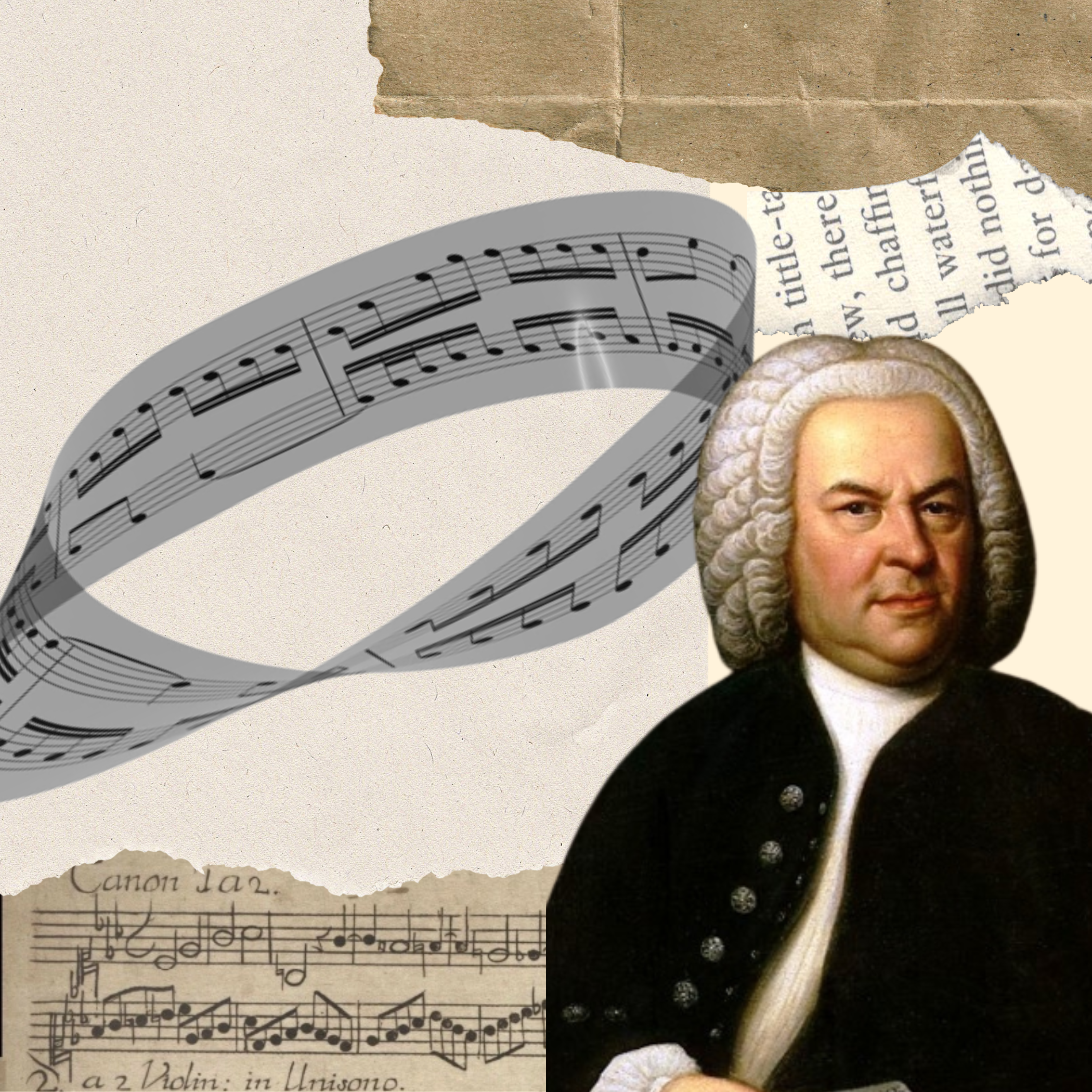
Bach's Crab Canon, also known as the "Canon a 2 per tonos," is a mesmerizing musical composition that showcases Bach's genius for intricate counterpoint. The piece consists of two melodic lines that are played simultaneously, with one line moving forward while the other moves backward. As the music progresses, the two lines intertwine and mirror each other, creating a continuous loop of melodic beauty. This unique structure gives the composition its name, as the melodic lines seem to scuttle and mirror each other like crabs in a dance.
Now, let's delve into the intriguing connection between Bach's Crab Canon and the Möbius strip. The Möbius strip is a mathematical object that has only one side and one boundary. It is formed by taking a strip of paper, giving it a half-twist, and then joining the ends together. This creates a fascinating loop that challenges our perception of space and continuity. Similarly, Bach's Crab Canon, with its intertwining and mirroring melodic lines, creates a musical loop that seems to have no beginning or end. It is this infinite quality of the composition that makes it a perfect match for the Möbius strip.
When the Crab Canon is transcribed onto a Möbius strip, the composition takes on a new dimension. As the strip is twisted and turned, the music seems to flow endlessly, with no discernible starting or ending point. The Möbius strip provides a physical representation of the infinite loop created by the Crab Canon, allowing us to experience the music in a tangible and visual way. It is a remarkable fusion of mathematics and music, where the boundaries between the two disciplines blur, and the beauty of both is brought to the forefront.
Bach's Crab Canon and the Möbius strip remind us of the interconnectedness of art and science. It is a testament to the boundless creativity and ingenuity of human minds, as Bach's musical genius finds resonance in the mathematical elegance of the Möbius strip. This unique pairing challenges our preconceptions of music and mathematics, inviting us to explore the infinite possibilities that lie within the realms of both disciplines.